| John Waters Interview Tom's XXL Book mentioned! |
by Greg Kramer in Frontiers IN LA volume 29, issue 2 |
Model Behavior
Read the original article on the Frontiers website.
| "Waters’ house is clean, but cluttered. 'I don’t think I’m a hoarder, but I’m not a minimalist, as you can see,' he cracks. Artwork lines every wall, and there are piles of books everywhere. He writes that he owns 8,089 titles, and one can’t help but notice the huge coffee table book of Tom of Finland prominently displayed." | 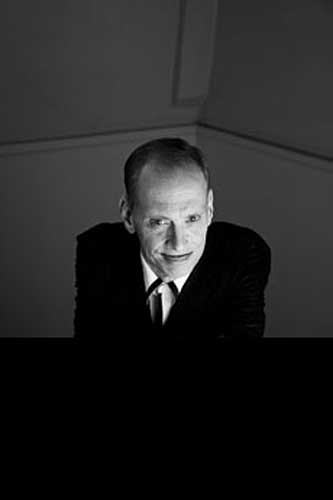 Photo: Greg Gorman |
Who does John Waters, the man who created the notorious Pink Flamingos, look up to? The author provides a book full of answers in Role Models, a hilarious and poignant collection of essays about everyone from Johnny Mathis to David Hurles and Rei Kawakubo. On a recent visit to the filmmaker’s Baltimore home, Waters discussed why he admires Mathis — whom he describes in the book as, “beyond fame.” He says, “He never gives interviews. I have never seen him in the world of show business. He does not participate in fame.” Yet Waters, who has been working as a filmmaker for almost 50 years, is proud of the fame he has achieved in his career. “I am the happy medium. Nothing bad happens in my life because of the level of fame I have. I don’t understand people that complain about going into show business, a business for insecure people that need other people to tell them how good they are for the rest of their life.” He continues on a roll, here, “Generally, you get great tables in restaurants, people give you free things. At the Spirit Awards — and I love the Spirit Awards — they treat you like a Katrina victim. Better than a Katrina victim! Why do I need a year’s supply of free yogurt? Why not give that to poor people? I’m not complaining. I got a great vacuum cleaner.” Waters’ house is clean, but cluttered. “I don’t think I’m a hoarder, but I’m not a minimalist, as you can see,” he cracks. Artwork lines every wall, and there are piles of books everywhere. He writes that he owns 8,089 titles, and one can’t help but notice the huge coffee table book of Tom of Finland prominently displayed. It prompts a mention of the “Outsider Porn” chapters in Role Models, and Waters’ fascination with the artists/pornographers Bobby Garcia and David Hurles. According to Waters, these artists “break the rules of gay porn.” He acknowledges that they are aroused only by their own work, “They are not doing it to make money. They live outside the law, and outside the porn law. And they are gaily incorrect, because they are celebrating [photographing] people who are basically not that gay friendly.” Waters later produces four David Hurles photos — portrait photographs of seedy-looking men with impressive erections — that he has in a folder on his desk. These confrontational images dare you to look at the subjects in all their naked glory just as the Alberto Garcia Alix photo “Nacho y Michelle” does. This image, featuring a woman displaying her ass and vagina, hangs in Waters’ guest bedroom between bookcases featuring titles like Roughhouse Rimmer, I Am a Teenage Dope Addict and I Was a Negro Playboy Bunny. One can only imagine waking up in this room. Waters seems to court outrage, even when it comes to his fashion sense. Wearing Comme des Garçons clothes designed by Rei Kawakubo, he gets attention that amuses him. “They write in the papers that I was [at a premiere] in ‘my thrift shop finest,’” Waters says, “But I love that, because you’re not being ostentatious. People think you got beat in the thrift shop. I never tell them this [outfit] cost money, or it’s from a famous designer. It made my father crazy. ‘You bought that? And it costs more? It should have been on sale!” Waters even modeled for Kawakubo once, wearing too short black pants and a white dress shirt, where he recalls, “the shirt tail came halfway down to your knees, ragged, like all the way around.” He also reveals something that might surprise fans in Role Models. Waters’ trademark pencil mustache is enhanced by Maybelline. “People are surprised?” he asks, incredulous. “In memoirs, you have to reveal some secrets. That’s a fashion secret. It’s not exactly [juicy]. It’s real, there is hair there. [He leans in so I can get a look.] You can see it. I just trimmed it. It just needs help. Especially with gray.” As Waters gets older, he is less scandalized, but of course, there are some things that surprise even him. He writes about “Blow Roasts” in Role Models, and claims he was “shocked” when he heard about these dinners where bull roasts meet blow jobs. Regarding the women who “work” these events, he opines, “It’s the lowest form of show business. Worse than a fluffer — even though there is no such thing.” But Blow Roasts are extreme, which is something Waters can appreciate. As he concludes Role Models, he writes that, “Filth is just the beginning battle in the war on taste.” And he backs this up with the observation that, “It’s the middle that I’ve always had trouble with and fled my whole life.” Maybe that’s why he has always been an outsider—and
always inspired by others like him. |
|