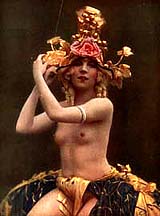
| According to exhibition curator
Jennifer Kabat, "Vamps & Virgins" exposes the secret history
of the pinup, which mirrors mainstream 20th century history,
and charts how the role of women has changed and their images
have been employed for more than 100 years.
"The development of the pinup and its accompanying
spread of scantily-clad ladies across American culture, from
ads and billboards to TV, is easily the single most important
development impacting women's rights, the history of sexuality,
and feminism over the last century," says Ms. Kabat. "In this
post-modern, post-Playboy world we're used to our pinups coming
self-aware, self-assured and as self-described feminists, but
it wasn't always the case."
At its inception erotic photography was far more explicit than
contemporary images. Traded privately, these pictures now have
a quaint feel with their couples (and threesomes, foursomes
and more) sporting serious expressions and often matching costumes.
Toned down as the images spread to the populace at large in
postcard form, the pinup started to wear the camp, coy expressions
that are the genre's hallmark, reaching her highpoint with Bettie
Page. After Page, the style changed again, turning towards the
explicit look of the contemporary centerfold. |